Very similar to bird's eye speedwell (V. persica), also to ivy leaved (V. hederifolia) and pink ivy leaved (V. subulata) and gray field (V. polita) speedwells.
This species has small, round leaves and very long stems on flowers, much more than twice the length of leaves. Flowers are less than 1/2 inch across. leaves are very sparse.
The ivy-leaved speedwells have leaves wider than long with a very broad terminal lobe. The leaves overall are larger than these (more than 1/2 inch)
Bird's eye speedwell has flowers over 1/2 inch and leaves longer than wide with lots of teeth and over 1/2 inch.
Gray field speedwell has flowers smaller than leaves, leaves longer than wide, over 1/2 inch long and toothy, with flower stems shorter than leaves.
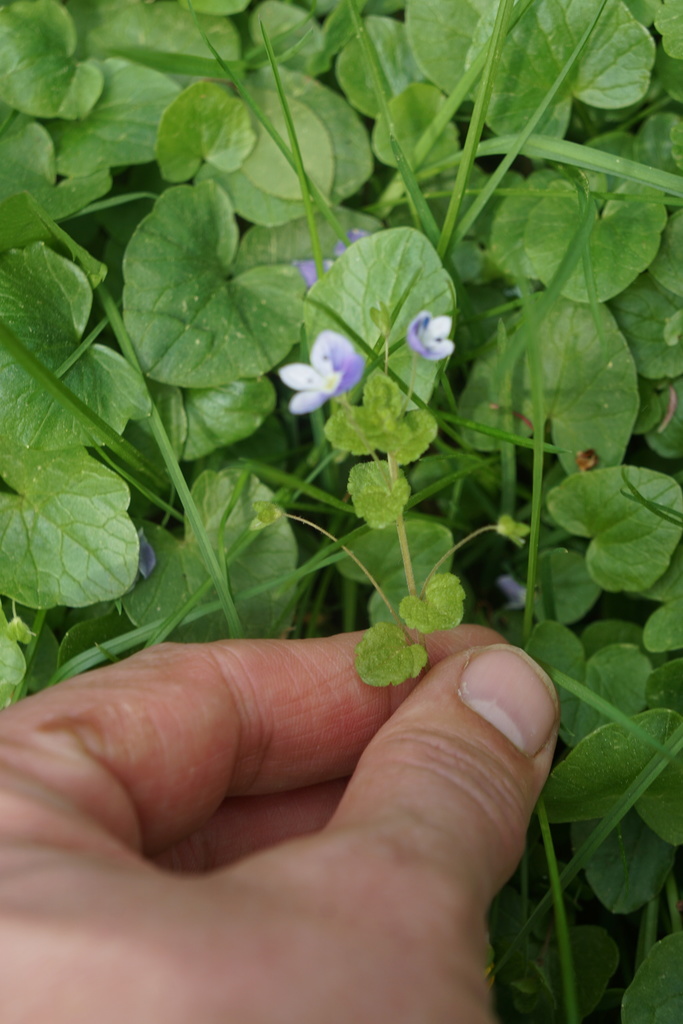
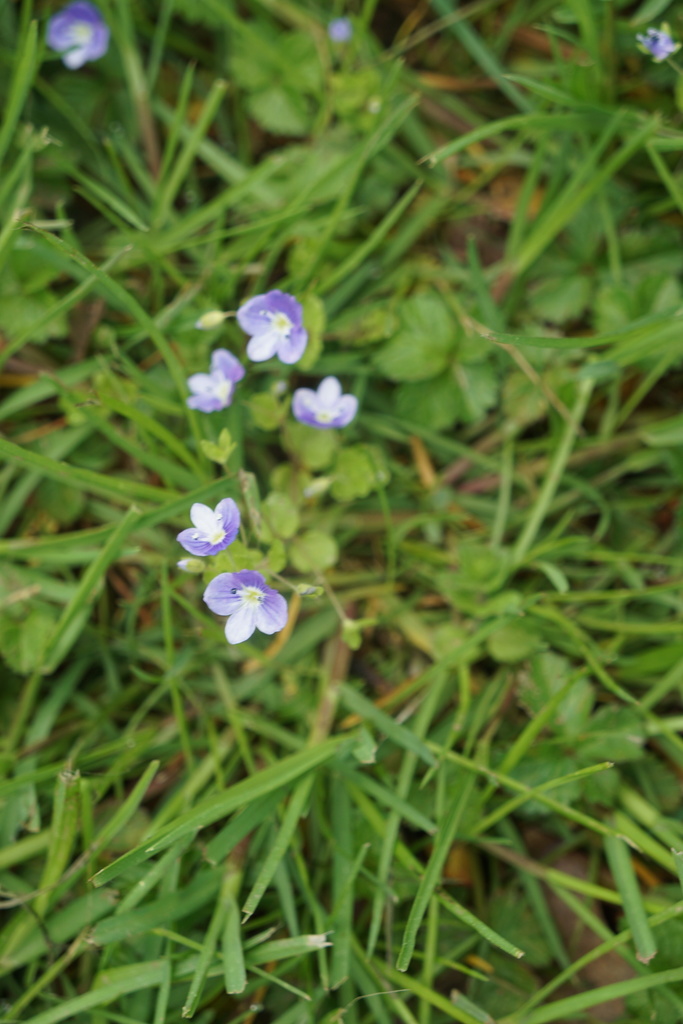
Very similar to bird's eye (V. persica) and slender (V. filiformis) speedwells. This is a mat-forming speedwell with medium-sized (for a speedwell) bright blue flowers in early spring (April). Its leaves are longer than wide and have several deep teeth (unlike the broader than wide ivy leaved (V. hederfolia) and pink ivy leaved (V. sublobata) speedwells)
Bird's eye has bigger flowers, more than half an inch across, that look nearly the same size as the leaf. Bird's eye's flowers and especially fruit are on stems at least as long as the leaf.
Slender has much smaller, round leaves and again the flower stem is longer than the leaf, and the flower looks about as big as a leaf.
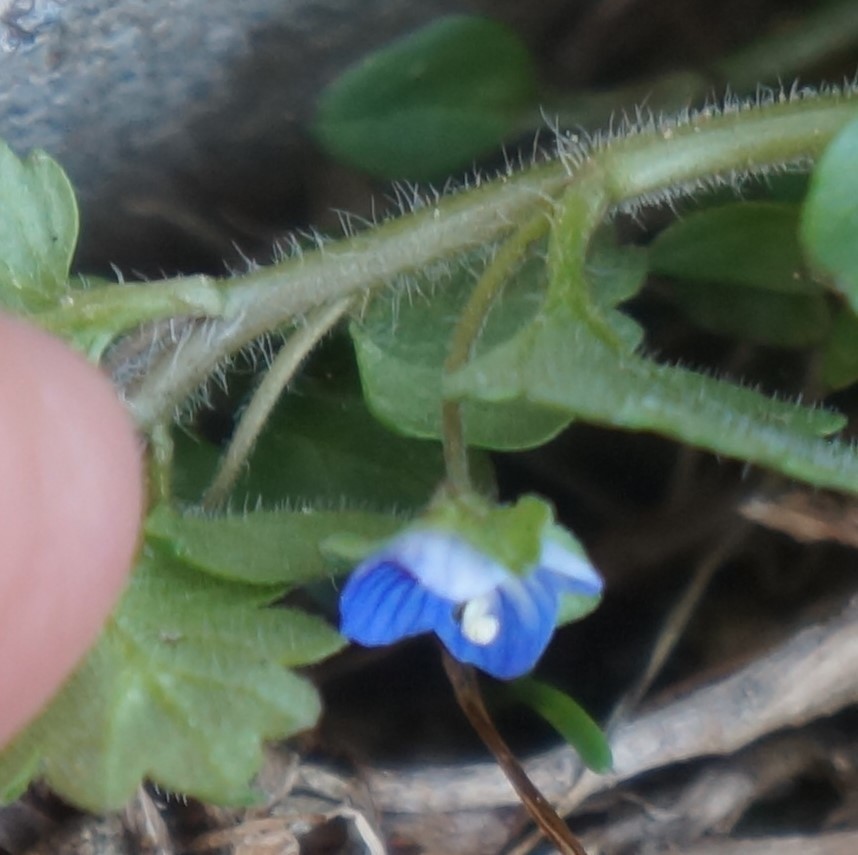
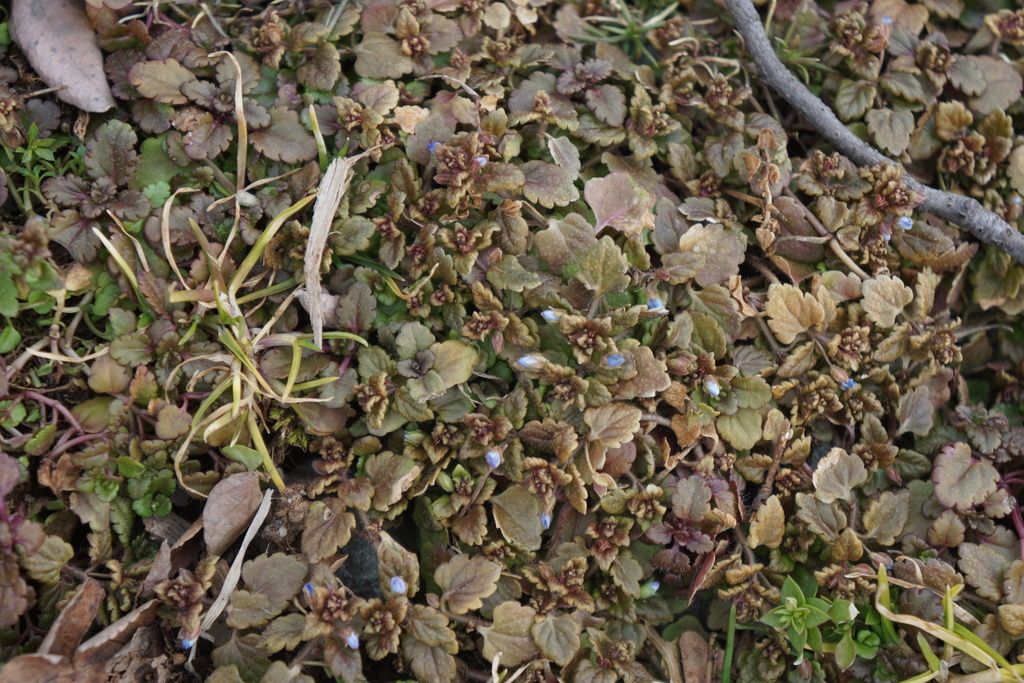
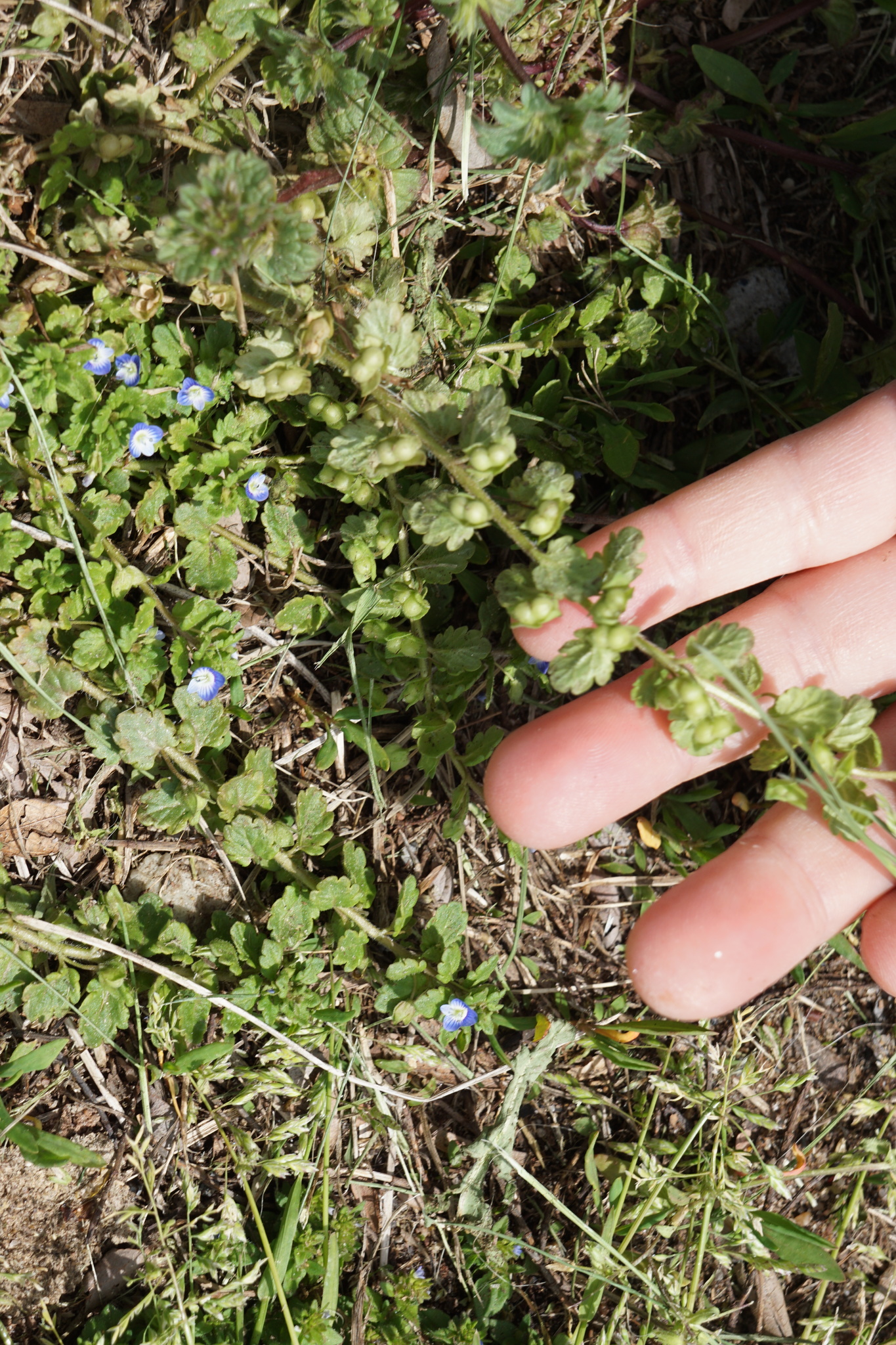
In gray field speedwell (this species) the flowers are not larger than 1/2 inch, not larger than the leaf, not on stems longer than the leaf, and the stems have a mix of hairs of different lengths that like to stand out from the stem.
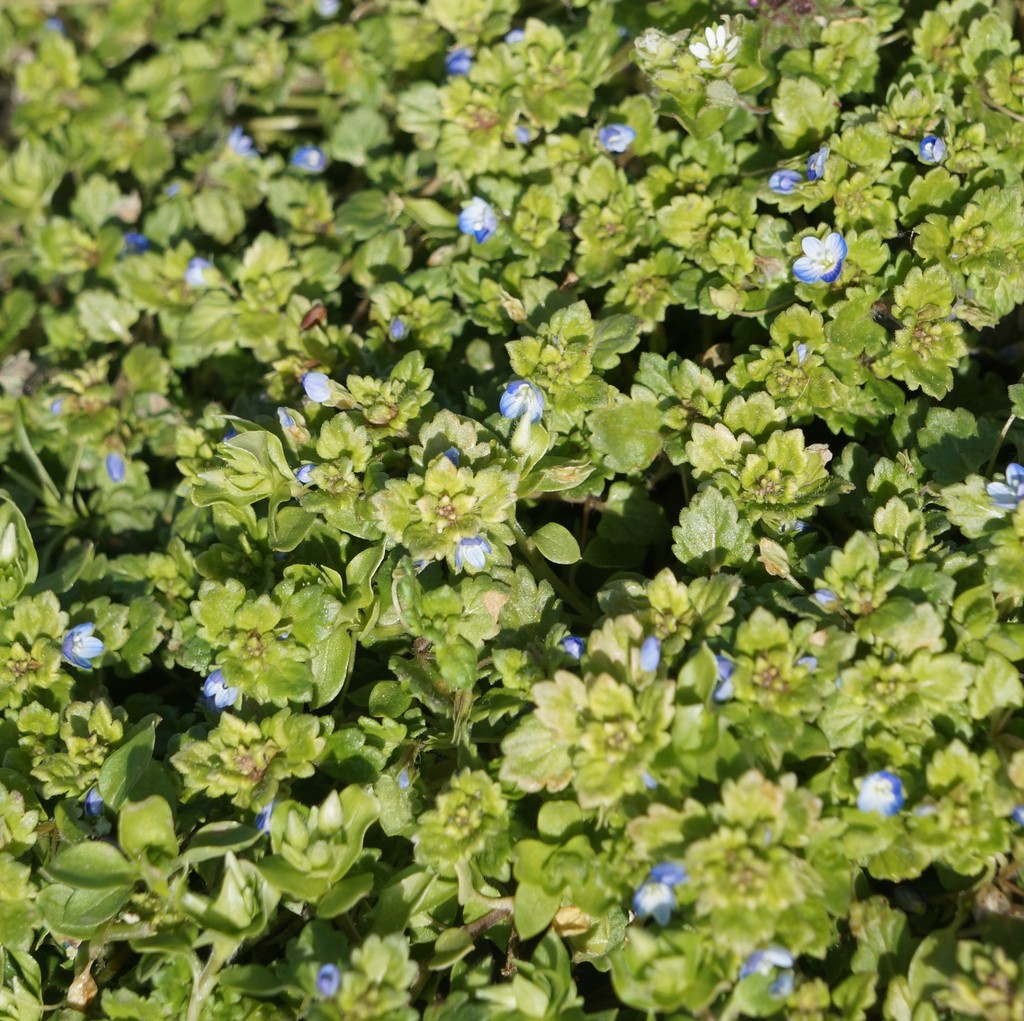
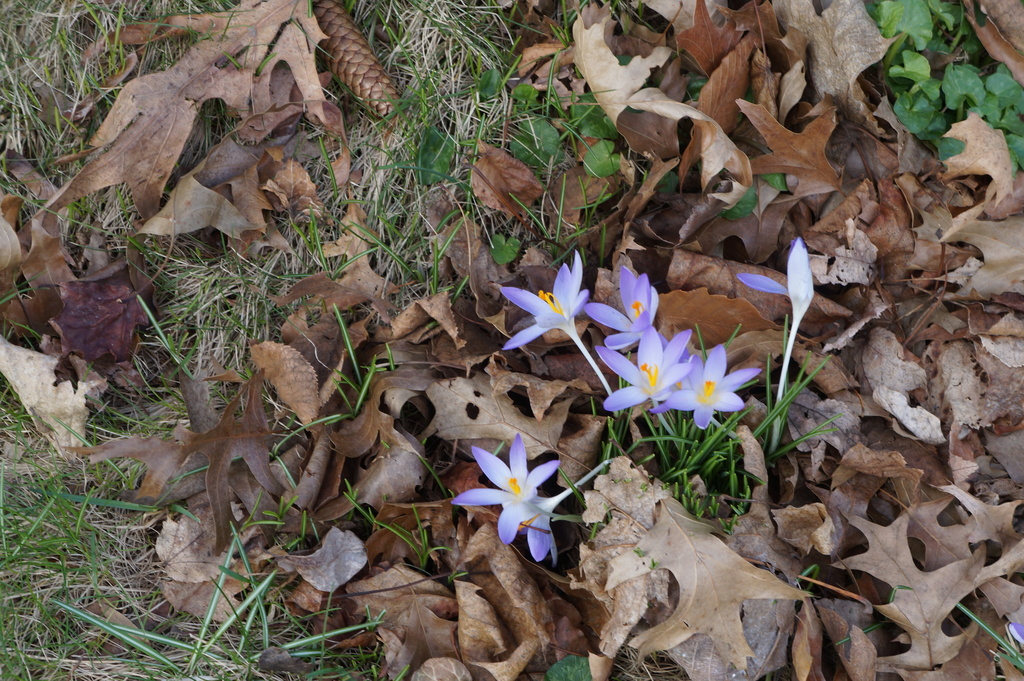
This is the first crocus to bloom in our area, generally two weeks before Dutch crocuses. It has an all white throat, a narrow stem and base of flower, no clasping leaves or bracts, and only comes in shades of purple (generally in lavender)
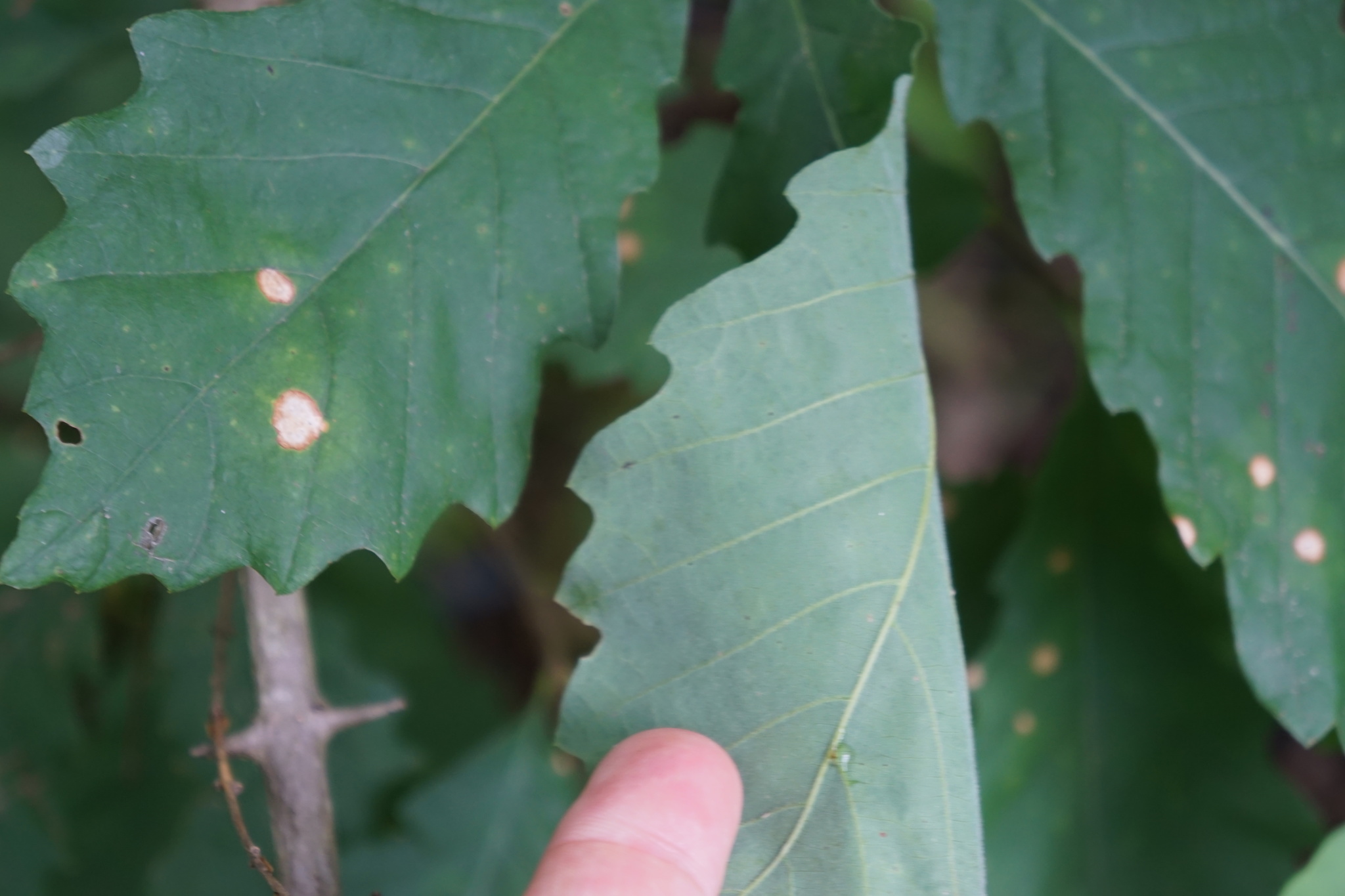
Chinquapin oak grows in calcareous soil, so not in the Piedmont but rather the Ridge and Valley of New Jersey. It's a tree, not a cloning shrub. It has evenly lobed leaves like a chestnut oak, but each lobe ends in a defined tooth, that is not long enough to be a bristle (thus this is still a white-type oak).
Its bark is supposed to be flaky like white oaks but often yellowish and its acorns are striking when ripe: dark brown with a very light greenish cap which is large and tight and covers about 1/4 of the nut.
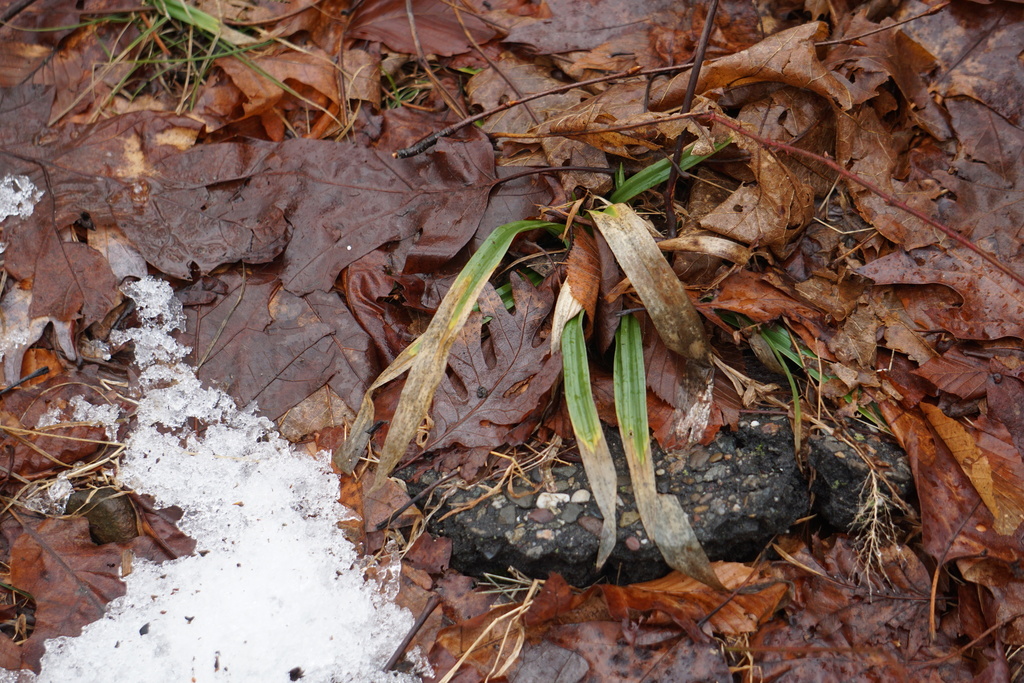
Relatively wide leaves, strong W pleating, even width throughout, tips die back in winter.
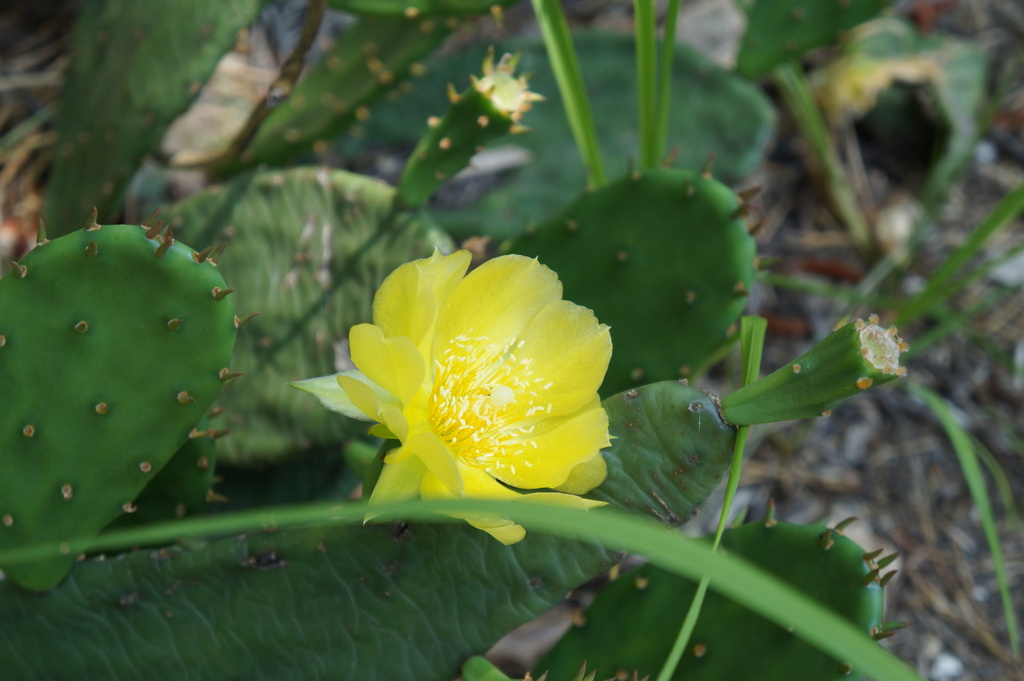
This is the much less common cactus of the Jersey Shore. It has flowers with red centers (always). It can have spines or not. Pretty much all cacti with spines are this, but it can also completely lack spines. Its areoles (the dark spots) have lots of spiny hairs that should be relatively easy to see.
If the flowers are entirely yellow it should be O. humifusa instead, the more common species.
Note that there are two weird species of Opuntia on Long Beach Island and Brigantine. One has tiny pieces to it and the other is very upright not sprawling as here.
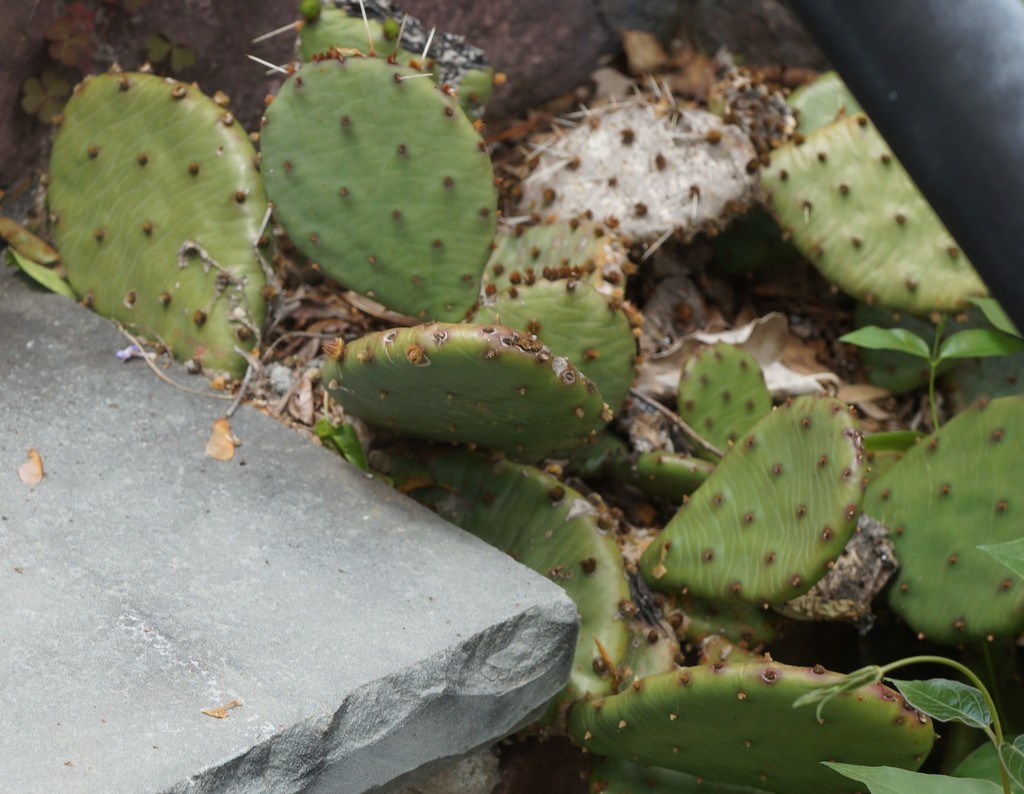
This is the more common cactus on the dunes in NJ. Its flowers have no red in the center. It never has any spines. Its areoles (the dark spots) should not have much in the way of obvious spined hairs (but this is subtle) In the photo here it has little branches in the areoles but not much in the way of the hairs.
If it has red in the flowers or any spines it is probably O. caespitosa. On Long Beach Island and in Brigatine there are two weird rare (for NJ) Opuntia species.
There are four privets in New Jersey: border (L. obtusifolium), common (L. vulgare), Chinese (L. sinense) and California (L. ovalifolium).
In central NJ border privet is vastly more commonly escaped than all the others put together.
California privet has shiny twigs (branchlets) that are entirely smooth. All others have dull twigs.
Border privet is either deciduous or semi-evergreen. All the others are evergreen or semi-evergreen, so a privet with no leaves in late winter is border.
California privet always has pointed leaves.
Border privet never has pointed leaves (they are blunt, rounded or indented)
Chinese and common can have either pointed or rounded leaves.
Common privet only has flowers/fruit at the ends of branches, never in the axils. All others can have axillary clusters of flowers/fruit.
All privets can have flower/fruit clusters around 2 inches long. Only border privet can have clusters smaller than that. Chinese and California clusters can be up to 4 inches long.
Border and Chinese privets have dull, blue fruit (because of a bloom on the fruit). Every now and then this gets rubbed off, leaving shiny black fruit, but it's rare, and generally still present toward the center of the cluster.
Common and California privets have shiny, black fruit.
Chinese privet has stems of individual flowers and fruit longer than 1/2 inch. All other privets have short stems
Chinese and common privet have flowers with petal lobes about equal to length of tube. Chinese also has reproductive parts sticking out well beyond the tube (common does not).
California and border privet have flowers with petal lobes much shorter than their very long tubes. (but California has shiny twigs and border has dull and hairy)
Border (and only border) can have 1-inch, pointed, somewhat thorn-like branchlets. They are not always present.
To prove (or disprove) you have border privet:
when flowers are present: long tubes on flowers, twigs not shiny
when fruit is present: fruit is dull blue, not shiny black; any fruit clusters are under 2 inches, also some clusters not terminal; stems of each fruit under 1/2 inch; whole cluster under 2.5 inches; stems of fruit hairy.
when only leaves present: leaves are not pointed, small twigs are not shiny, leaves are not thick and leathery. (This will not be enough to prove you have it, it only definitively rules out California). Also, a very close shot of hairs on small twigs will show them to be of very differing lengths (that would prove L. obtusifolium). Border privet is the only one with 1-inch, pointed, somewhat thorn-like branchlets, if you see these, it's definitive.
when no leaves present (and healthy buds present): the only privet that will lose all its leaves in winter (and it doesn't always) is border. To prove it's not some other genus, make sure the buds and branches are opposite, the bark is not shreddy, no buds are more than 3 times larger than the smallest buds, no buds are more than 2 times longer than wide, no buds are red. Look for 1-inch, somewhat thorn like side branches (this is pretty much the only shrub with opposite buds and "thorns", if these are present).
I am not very experienced with unusual blueberries. This does not include Pine Barrens species.
The common highbush blueberry in central NJ is northern highbush blueberrry (V. corymbosum). It is generally taller than an adult, has spindly branches that can be green or red (or brown) and conspicuous red buds in winter. It has pale pink or white flowers and blue fruit, and the leaves do not have any resin dots but are minutely fringed on the edges. This is the blueberry sold in grocery stores. It often has blueberry stem galls, with a walnut-sized, lima-bean shaped growth that makes the stem bend at 90 degrees. Highbush blueberry grows in damp soil.
The common short blueberry in the Watchungs is Blue Ridge blueberry (V. pallidum). It is often only knee high, not above waist high, grows in dry soil, has very narrow, often green branches that are not smooth, and has leaves that often lack teeth. The fruit are small and dark blue.
The only other short blueberry is common lowbush (V. angustifolium). It always has teeth on the leaf edges and is never lighter below. Otherwise very like V. pallidum. Note that taller berry trees can be short when young or growing in adverse conditions.
Tall or tallish blueberries and huckleberries in order of how common they are here:
-northern highbush blueberry (V. corymbosum)
-black huckleberry (G. baccata)
-deerberry (V. stamineum)
-dangleberry (G. frondosa)
How to separate the tall species:
Flowers:
-narrow (longer than wide) and white or pale pink: highbush
-narrow (longer than wide) and dark pink/red: huckleberry
-broad (wider than long), white, but still bell shaped, narrowed near tip: dangleberry
-broad (wider than long), white, not bell shaped, spreading lobes: deerberry
Fruit:
-stem not much longer than fruit, blue: highbush
-stem not much longer than fruit, black: huckleberry
-stem much longer than fruit, fruit blue: dangleberry
-stem much longer than fruit, an odd bluish green: deerberry
Leaves:
-wide or narrow, with yellowish, sticky glands on both sides: dangleberry
-not narrow, with yellowish, sticky glands only below: huckleberry
-not narrow, no glands, often widest below middle, with ciliate edge, can be toothed: highbush
-not narrow, no glands, generally widest at middle, no teeth, no cillia on edge: deerberry
Buds:
-red and round: highbush
-red and sharp: huckleberry
-not red, but round: deerberry
-not red, but pointed: dangleberry.
In Vitaceae in New Jersey we have Parthenocissus (quinquefolia, inserta, tricuspidata), Ampelopsis (only glandulosa), and Vitis (aestivalis, labrusca, riparia, vulpina, and those planted in vineyards, which I ignore).
P. tricuspidata is the only one with some leaves three parted. If all leaves are whole, then it's got smaller leaves and leathery and it grows by tendrils tipped in disks. It's also only here where planted, I've seen it spread away from the planting but never show up where there has never a reason to plant it there. But remember if seeing a winter vine on a building with disks it is possibly this (and not necessarily P. quinquefoila)
P. quinquefolia and P. inserta are tough to separate and often can't be in NJ. If disk-tipped tendrils are present it is P. quinquefolia, but their absence does not make it P. inserta. P inserta generally has shinier leaves with longer petiolules, but that is not enough to rule out P. quinquefolia. If the flowers or fruit are present, P. inserta always has dichotomous branching and P. quinquefolia always has a strong central stem (if zig-zagging) to the inflorescence.
P. quinquefolia is far more likely to climb tree trunks than P. inserta. P. inserta generally cannot climb a flat wall at all. P. inserta is much more common in chain-link fences.
Ampelopsis and the Vitis species are tough. Old Ampelopsis vines do not shred. Shredding bark is always Vitis. V. riparia does not have big "knuckles" at the attachment points of the tendrils. The other three grapes do.
Be aware that very old Parthenocissus vines look like Toxicodendron vines (or Hedera vines) but with fewer, lighter, less branched rootlets (but still far more of them than I would expect, given a young vine to compare to).
A. glandulosa has downy/somewhat hairy leaf stems and the newest part of twigs. A. glandulosa is never white or red below. A. glandulosa does not have teeth that are concave on the edges, as V. riparia does. A glandulosa does have big knuckles at all joints, unlike V. riparia (but similar to the vastly less common V. vulpina).
The fruit is key for separating Ampelopsis from Vitis, Ampelopsis flowers and fruit are in umbels, they never have a central stem. Vitis blooms earlier, has flower clusters visible generally from the moment of leaf unfurling, and those clusters always have a central stem (if zig-zagging).
Grape leaves that are reddish or rusty-hairy below are always V. labrusca.
Grape leaves that are white below are V. aestivalis if you can see the texture of the leaf veins below, and V. labrusca if the white wooliness conceals the texture of the underside leaf veins. V. aestivalis is much more common in my experience.
If the grape is green below look at the teeth. V. riparia has concave edges to the leaf teeth, making them "sharper" looking. V. vulpina does not. V. riparia is vastly more common (or I'm mis-IDing a lot of V. vulpina, but I've heard V. riparia described as "abundant").
I have been told that Ampelopsis tendrils fork dichotomously (both halves the same length) and Vitis tendrils do not (one side longer, and more in a straight line with the tendril stem). I can't see it myself.
Ampelopsis will climb kudzu-like over everything and smother it; Vitis does not (it tends to dangle below, and use trees far more than shrubs).
In New Jersey there are two common hollies growing wild: American holly (I. opaca) and common winterberry (I.verticillata). There are two other wild hollies: smooth winterberry (I. laevigata) and inkberry (I. glabra), an escaped holly: Japanese holly (I. crenata), and garden, hybrid hollies (Ilex sp.)
Hollies with classic, prickly leaves are either American or hybrid. Generally non-American garden hollies do not escape, but they persist for a long time and so can appear to be wild. American holly will have more than two prickles on each side of the leaf and the leaves will not be particularly twisted.
Japanese Holly is mostly a planted shrub but does sometimes escape and also persists in now-wild locations. It is more likely to be confused with box (Buxus sp.) than with any other holly, but it always has alternate leaves (box is opposite) and tiny teeth on the outer half of the leaf (box is entire). The leaves are tiny and evergreen, as in box.
Inkberry is mostly found in very dry soil of the Pine Barrens and ridgetops. It is also often planted in landscaping. It has more elongated, evergreen leaves usually with only a few slight teeth at the tip, and black fruit. The leaves are always at least three times as long as wide.
Winterberries are difficult to separate. Common is vastly more common in NJ than smooth, which may be confined to the coastal plain. Both have large deciduous leaves with fine teeth all along the edge and red fruit.
Common winterberry has: branches roughly all the same length. Twigs sometimes hairy. Leaves mostly less than twice as long as wide. Leaves mostly widest above the middle. Leaves sometimes hairy below or even above. Leaves rugose (quilted looking). Leaves with most veins below very prominent. Leaves generally with sharp teeth. Fruit usually clustered in a way that looks whorled around stem. Fruit generally under 7mm. Fruit with stems clearly shorter than the width of the fruit.
Smooth winterberry has: some branches much longer and some much shorter than others. Twigs never hairy. Leaves mostly two to three times as long as wide. Leaves usualy widest at the middle. Leaves not quilted (rugose). Teeth sometimes appressed and sometimes rounded. Leaves usually smooth or with some hair on the veins below. Leaves with only a few veins prominent on the underside. Fruit generally singly in the leaf axils. Fruit generally over 7mm. Fruit stems generally about equal to the width of the fruit.
This guide is NOT for the Pine Barrens or "down the shore"; there are many species there that are left out here.
Also, make sure you are not dealing with planted "asters", there are tons more of those as well.
In central and northern NJ there are five genera with "aster" like flowers:
Symphyotrichum (the American asters)
Erigeron (the fleabanes)
Eurybia (the wood asters)
Doellingera (the flat-topped asters)
Oclemena (whorled wood aster)
Fleabanes (Erigeron sp.) are the only of the "aster-like" flowers that bloom before August. They have over 50 white or purple rays that are narrower than asters', almost hair-like. They have yellow disc flowers where it is essentially impossible to see individual flowers, they look like a yellow "button". Some will still be raggedly blooming in fall. They have very long, narrow, mostly leafless stems.
-Philadelphia fleabane (E. philadelphicus): clasping leaves
-Annual fleabane (E. annuus): stems with hair that sticks straight out
-Daisy fleabane (E. strigosus): stems with appressed hair
-Robin's plantain (E. pulchellus): usually basal leaves, longer rays, usually purple, less common
(note that horseweed (E. canadensis) is also in this genus but looks nothing like an aster)
Flat-topped aster (Doellingera umbellata) is not common in NJ. As its name implies, its flowers are in very flat clusters at the top of a very straight plant. It can have several separate clusters or only the one. The rays are white and there are 7-14 (so, not many) rays per flowerhead. The leaves are very uniform, long oval, tapered at both ends, about 2 inches (or a bit less) long. The stems are zig-zag-y and usually reddish-brown.
-Cornel-leaved whitetop (D. infirma) is also recorded from northern NJ but is very rare. It has taller flowerheads (the green bracts below are taller)
Whorled wood aster (Oclemena acuminata) has large, oval (or long oval) leaves that look whorled if you look down on the flower from above, and very few flowers with long skinny white rays. It is not common and mostly found in north Jersey woods.
Wood asters: (Eurybia sp.) have heart-shaped leaves always present on the lower part of the plant and rays generally over 1/2 inch long. They can be white (common) or purplish (rare). The leaves never have winged stems, they are always corsely toothed. The flowers never have more than 20 rays. The flowers are in losely flat-topped clusters (but the leaves are totally different from flat-topped aster) Note that two American asters (Symphyotrichum sp.) also have heart-shaped leaves always present (S. cordifolium and S. lowrieanum), but both have purplish rays under 1/2 inch.
-White wood aster (E. divericata): common. 5-10 white rays. 5-15 teeth on each side of leaf. V-shaped leaf notches. No glandular hairs on leaves.
-Large-leaved wood aster (E. macrophyla): not common. 8-20 purple-tinged rays. Glandular hairs all over leaves.
-Schreiber's wood aster (E. schreiberi): uncommon (but should be present): 6-12 white rays. 15-30 teeth on each side of leaf. Squared off leaf notches. No glandular hairs on leaves. The phyllary (green part below flowerhead) is very tall and narrow.
American Asters (Symphyotrichum sp. ) are the toughest ones.
First off, the easy one:
-New England Aster (S. novae-angliae): Big flowerheads. Over 50 rays. Usually dark purple, can be white or pink. Stem very hairy, leaves clearly clasp the stem. Generally any non-planted large aster with over 50 rays in northern NJ is this species.
Note that there are several rarer species of aster with large flowerheads (1 inch across, roughly) and purple flowers that I am not covering in this guide. None have over 50 rays.
The ones with heart-shaped leaves always present:
-Common blue aster (S. cordifolium): unwinged leaf stalk, heart shaped lower leaves, under 20 short, purple-ish rays.
-Lowrie's aster (S. lowrieanum): winged leaf stalk, heart-shaped lower leaves, under 20 short, purple-ish rays.
If you find one with large-ish, non-linear, leaves present and no heart shaped leaves at the base of the plant, leaves have teeth, flowers small, few white rays it is probably Calico aster (S. lateriflorum)
Finally, the beastly ones. All often drop their main leaves, all have small white flowers, all at least sometimes have small linear leaves by the flowers. For all of these see my separate entry just on small white asters.
-Panicled (or common white) aster (S. lanceolatum)
-Calico aster (S. lateriflorum)
-Frost (or hairy white oldfield) aster (S. pilosum)
-Small white aster (S. racemosum)
-Heath aster (S. ericoides) should be west of here but may be present
And a very uncommon, but possibly present species that looks like these but with small blue/purple flowers is probably bushy aster (Symphyotrichum dumosum).
Another aster-like species is Ionactis linarifolia, like a smallish purple aster with short straight grass-like leaves and no branching.
Here is my working guide to white asters (Symphyotrichum sp.)(without heart-shaped leaves) in central and Northern New Jersey. Note that all of these can have purple flowers as well, though uncommonly.
The phyllary bracts are extremely important (the green bits below the "flower")
Heath aster is the only one with pointy, all-green, divergent bracts
Calico aster is the only one with very wide-spread, even curved-back disc flowers
Frost aster is the only one with sort of urn-shaped phyllaries and the only one with green, needle-shaped, spreading bracts that curve away from the stem
Small white and panicled asters both have green striped bracts (calico has green-tipped, spotted looking bracts).
The number of rays and the size of the rays are important. Heath and calico have smaller flowers with few rays. Small white has small flowers with many rays.
The overall shape of the flower cluster is important. Is it widely branching? (if not, then not heath or small white). Is it one-sided (if not, then not small white).
Leaves are generally unimportant, but only calico and panicled can have leaves that are not linear.
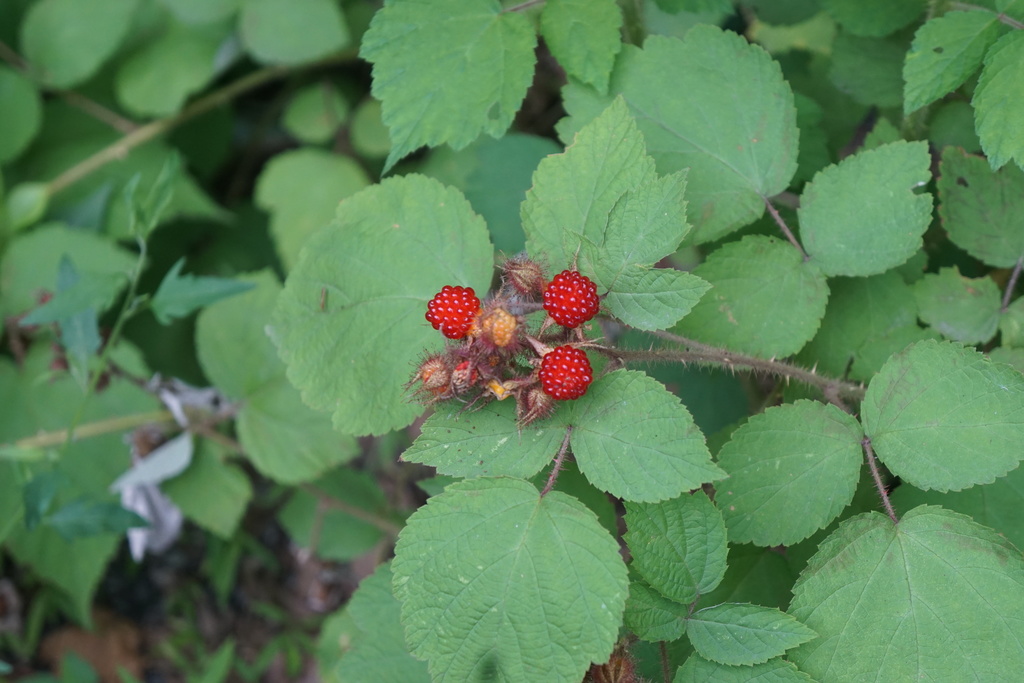
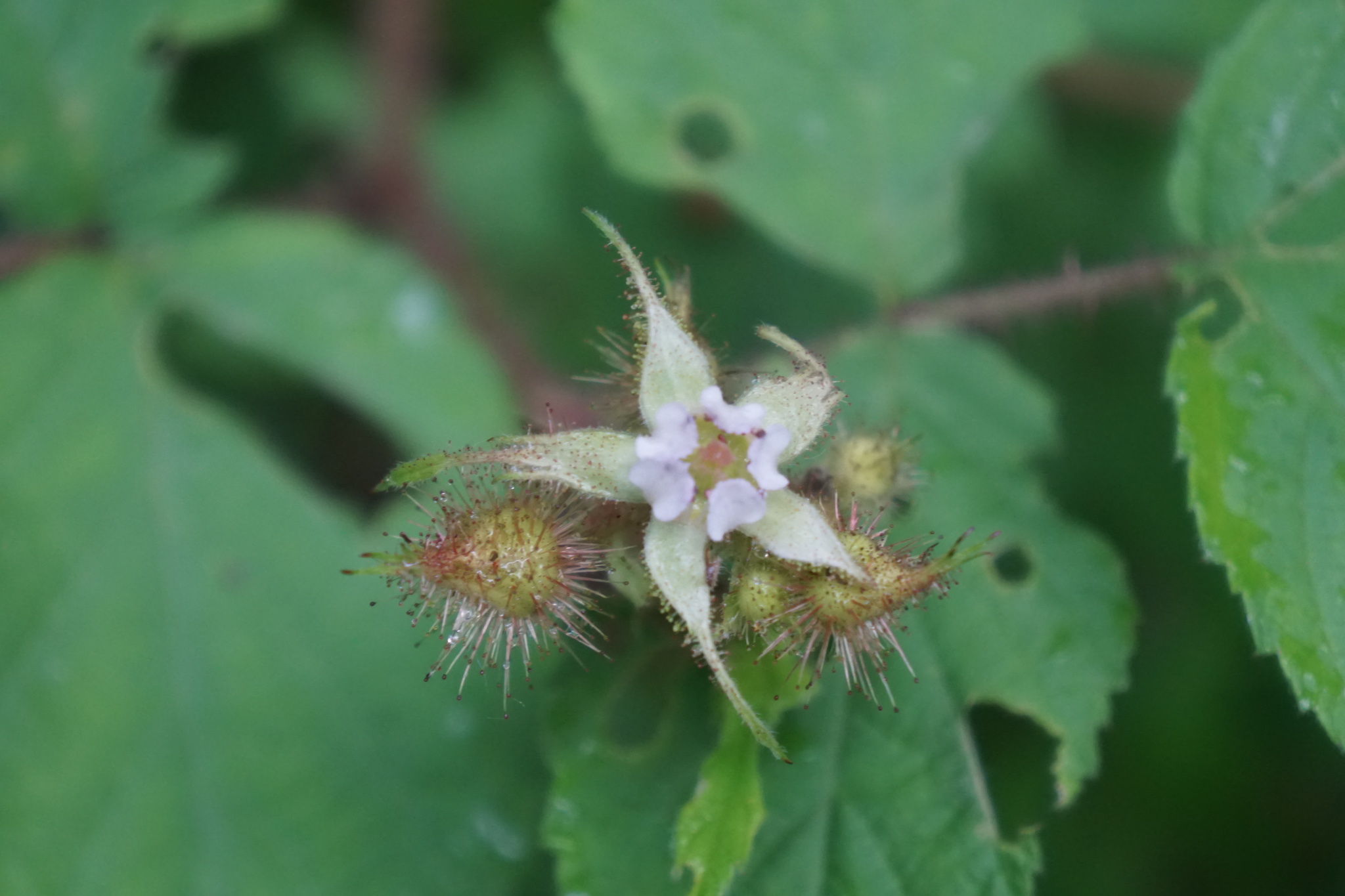
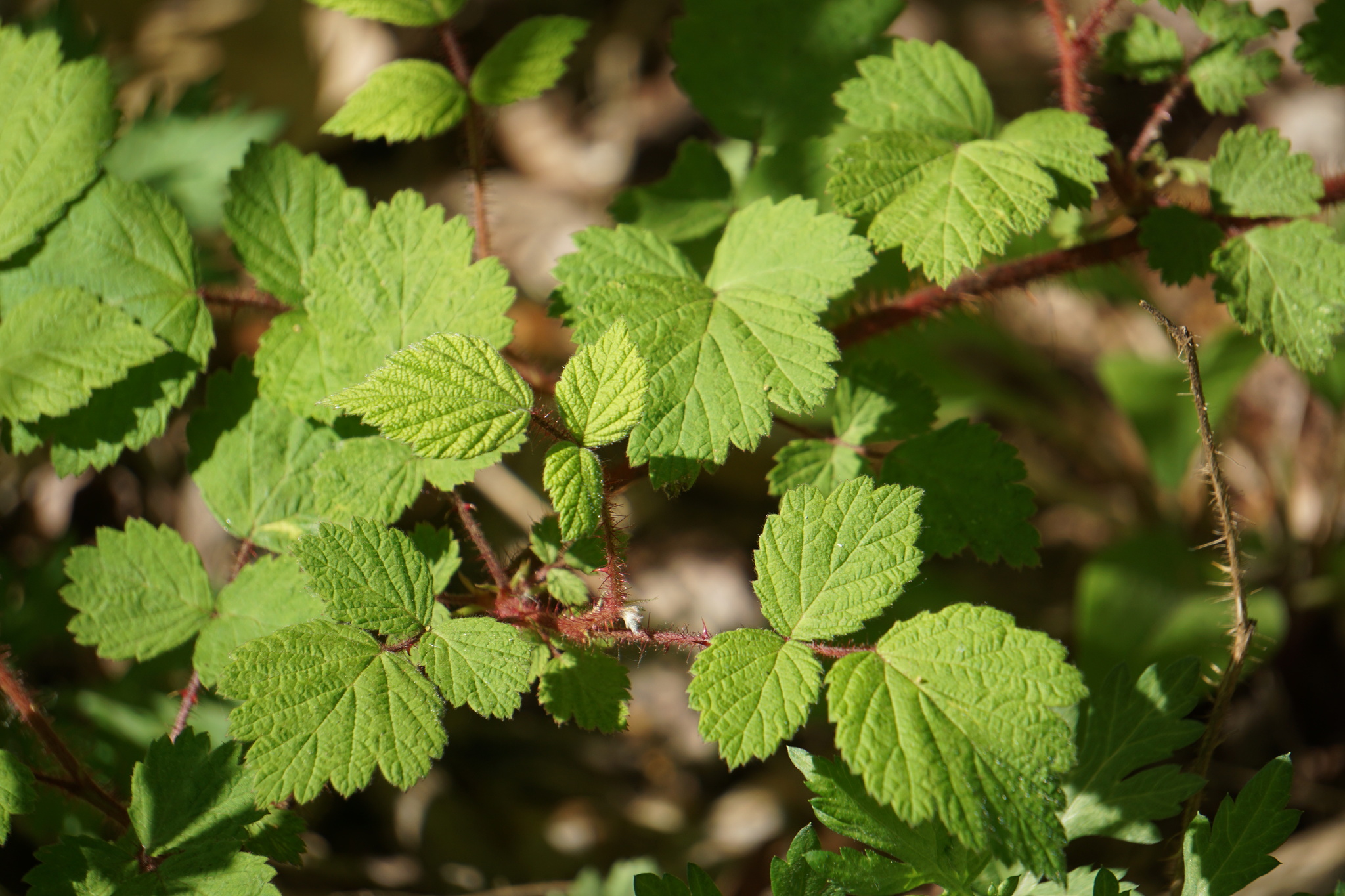
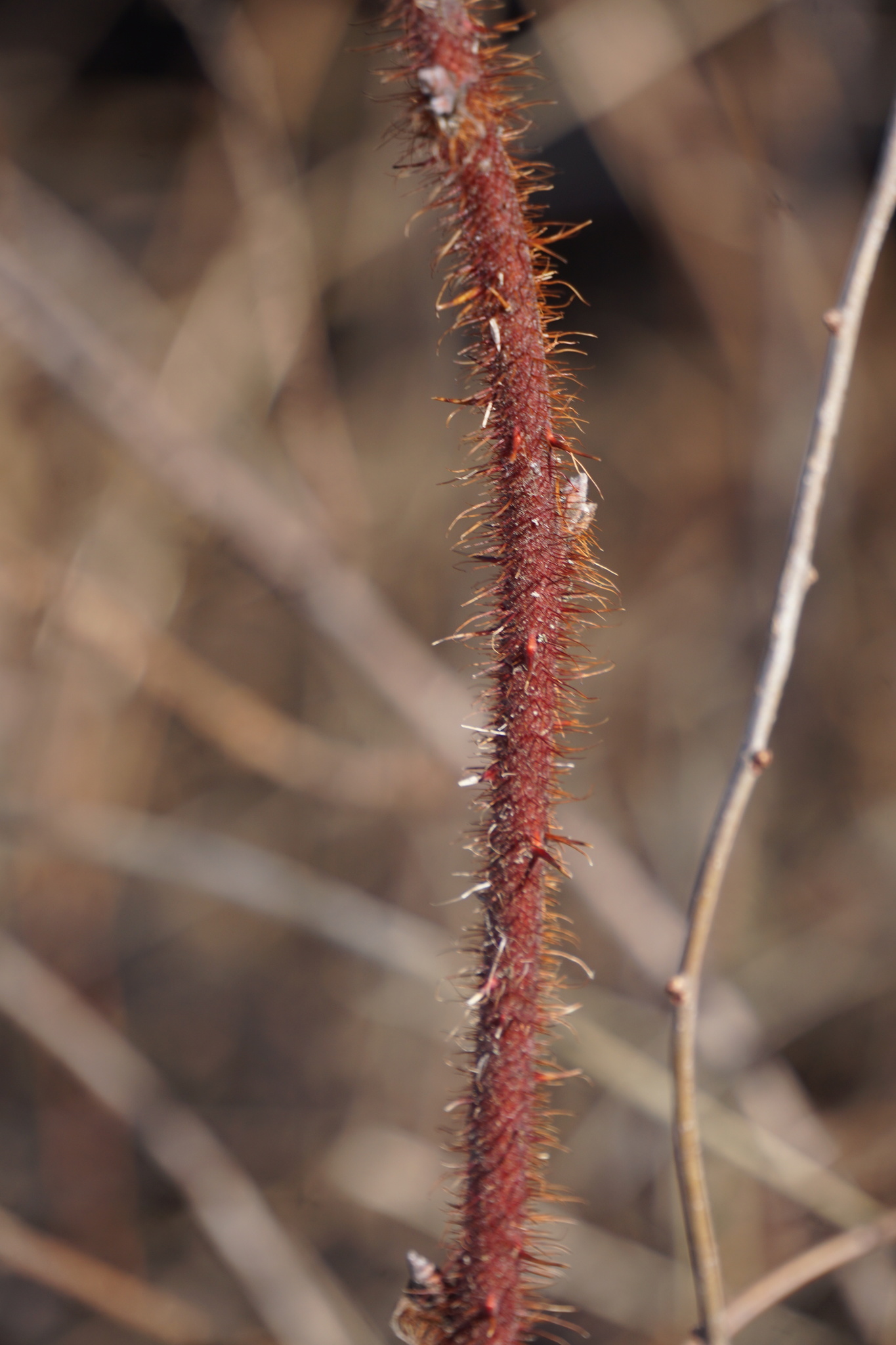
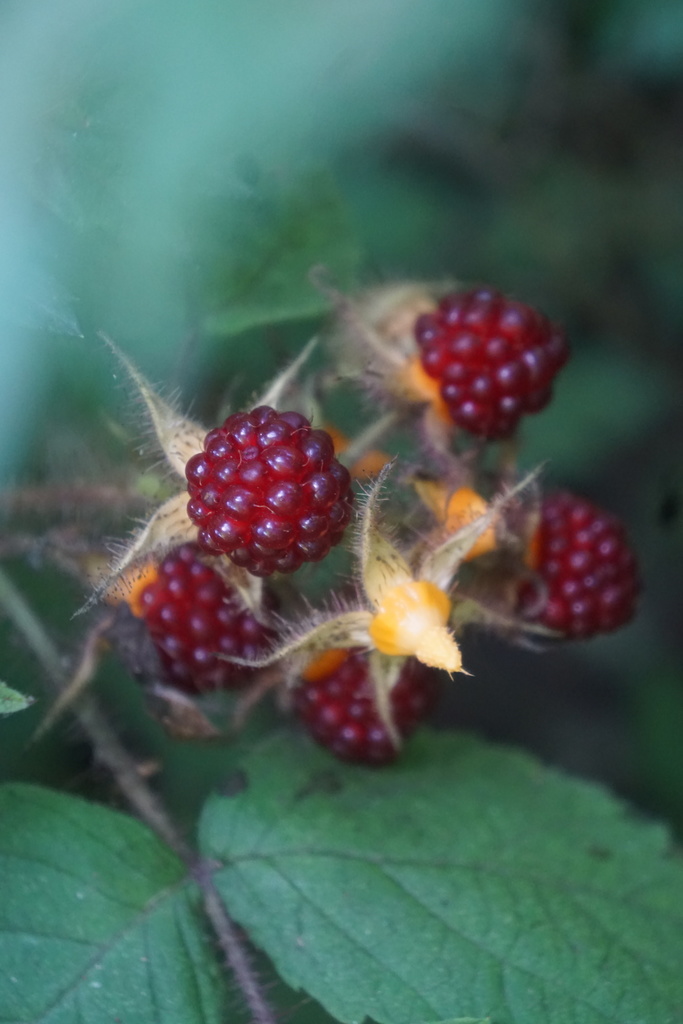
When looking at roses, first rule out brambles (Rubus sp.). If it has fluted stems, it's not a rose. If it has leaflet arranged palmately (all attached at the same point) it's not a rose. If it only has three leaflets with no leaves with more it's not a rose. If its fruit is a cluster of little bumps as in raspberries and blackberries it's not a rose.
You also need to rule out roses that are planted on purpose. They are generally hybrids and can't be IDed beyond species. Any rose with more than 5 petals on the flower is probably a hybrid rose.
The most common rose in NJ is multiflora (R. multiflora). It has stipules (at the base of the leaf stem) that are stringy. It has clusters of lots of fruit that are about pea sized (always clearly smaller than a marble). It has stout, curved thorns but never has prickles among those thorns. It often had deformed leaves caused by Rose Rosette Disease Virus
The other common NJ roses (in order) are: rugosa/seaside rose (R. rugosa), swamp rose (R. palustris), Carolina rose (R. carolina), dog rose (R. canina), and Virginia rose (R. virginina)
Twigs & thorns:
-If it has big, fat, curved thorns it's either multiflora or dog.
-if it has tons of prickles it's either rugosa or Carolina (some prickles, very curved thorns is swamp)
-if it has pairs of curved thorns it's either swamp or Virginia
-if it has pairs of straight thorns it's either Carolina or Virginia
Fruit:
-if the fruit is always smaller than a marble it's multiflora
-if the fruit is clearly longer than wide (football shaped) it's dog.
-rugosa hips are larger than swamp/Carolina/Virginia, but it's hard to estimate.
-if the fruit has hairs (generally with glands on the tips) it's swamp, Carolina, or Virginia
-but if it's smooth it can be any of them.
Leaves:
-if the leaves are very wrinkled, almost folded or quilted along the veins it's rugosa
-swamp rose has much finer teeth than any of the other roses.
Stipules:
-if the stipules are stringy it's multiflora
-if the stipules are extremely narrow it's probably swamp but might be Virginia.
-if the stipules are very broad it's rugosa (check texture), Carolina, or dog.
Sepals:
-if the sepals are lobed it's dog.
Flowers:
-if there are more than three flowers in a cluster it's multiflora (small) or rugosa, dog or Virginia (large)
-if there is one or two flowers in every cluster it's swamp or Carolina
Note that all the roses here can be pink or white. Multiflora is usually white, rugosa is usually very dark pink or white but can be pale as all the other species.
Location:
-if it is not "down the shore" it's not rugosa (unless it was planted)
-if it's not by water, it's not swamp.
Multiflora rose: stringy stipules; tiny fruit in huge clusters; big, hooked thorns; leaves with large teeth; sepals not lobed; small, usually white flowers with roughly a dozen in a cluster.
Rugosa rose: down the shore; very wrinkled, quilted looking leaves; extremely prickly and thorny stems; huge fruit often wider than tall; very wide stipules; average saw teeth; sepals not lobed; Large, usually dark pink or white flowers in clusters of 3-4.
Swamp rose: by water, very curved, stout thorns in pairs at nodes, sometimes some prickles; very narrow stipules; very fine teeth; round fruit hairy at first; sepals not lobed; usually large, light pink flowers.
Carolina rose: straight, thin thorns in pairs at nodes, usually with lots of prickles as well; wide stipules; leaves with average saw-teeth, no more than 2 flowers in a cluster; flowers large and usually pale pink; sepals not lobed; fruit round and often hairy.
Dog rose: Fruit longer than wide; sepals pinnately lobed; thorns large and hooked, scattered (not paired); fruit never hairy; stipules wide; flowers often in clusters of 4 or more; leaves with average saw teeth; flowers large and usually pale pink.
Virginia rose: stipules narrow; thorns fairly straight, paired at nodes; generally no prickles; generally three or more flowers in a cluster; leaves with average saw teeth, fruit round, often hairy; sepals not lobed; flowers large and generally pale pink.