Japanese honeysuckle is always a vine and always has opposite leaves. The vine itself is downy. The leaves are connected at the base by a ridge across the vine. The vine twines up and to the left and is shreddy when old. the flowers appear to have one big, upper petal, which appears to have a lobed edge, and one narrow, lower petal. The fruit is black. Fall color is often yellow. The vine loses many of its leaves in the fall, but in NJ it is evergreen and green leaves can be found throughout the winter.
In NJ in winter green vines are generally one of honeysuckle, wintercreeper, or myrtle. Wintercreeper always had teeth on the edges. Honeysuckle never does. Myrtle is very low growing, looks more like a ground cover and less like a vine, has very shiny leaves. Wintercreeper and often myrtle have a strong color contrast between veins and leaf.
Honeysuckle flowers are very fragrant and it is perfectly safe to "suckle" the honey from the base of the flower tube (by gently breaking it from the stem).
It can be difficult to separate Japanese honeysuckle from bush honeysuckle if you can't see the whole plant. Japanese honeysuckle stems are downy. The leaves are widest at the base and have a point. they are not as large or as long-pointed at Amur honeysuckle leaves and are thinner and longer than Morrow/Tatarian/Bell's honeysuckle leaves.
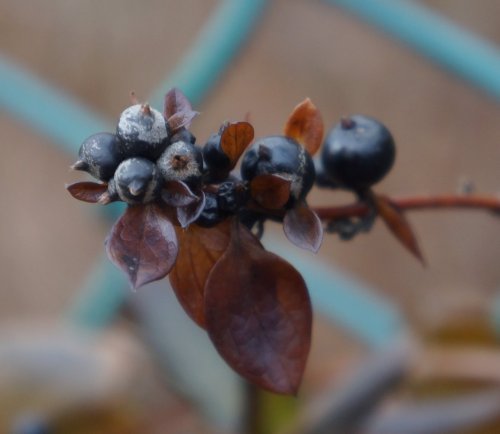
Honeysuckle fruit are black and not edible (though not dangerous).
Vines that twine up trees include honeysuckle, bittersweet, and wisterias. Only Japanese honeysuckle and Japanese wisteria twine up and to the left. Of these three types of vine, only honeysuckle has shredding bark. Grape climbs by tendrils but this is not obvious in older vines. It has shredding bark as well, but it is much darker and will not be as twisted around a tree as honeysuckle will.
It was introduced in 1806 for erosion control.
The vines can damage trees both by their weight and by girdling them as the vine does not stretch as the tree tries to grow wider.
In forests it can bring a mild, ground forest fire up into the canopy, making it much worse.
In Chinese medicine it is used to treat fevers, infection, swelling, and skin eruptions. It is gargled for sore throats.
It's extracts are used in both toothpaste and soy sauce as an antibacterial.
Like other non-native plants, it will leaf out before and stay green after native plants.
It blooms just after multiflora rose and continues to bloom sporadically up until frost.
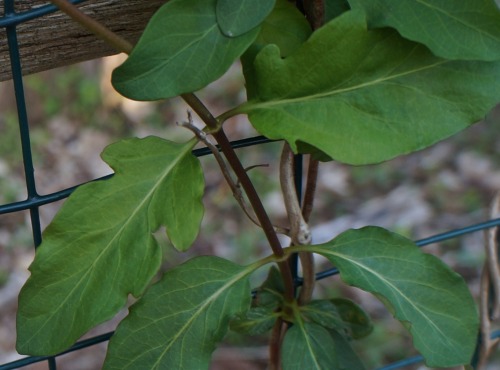 |
| Japanese Honeysuckle, Lonicera japonica, leaves can be lobed, especially on new growth |
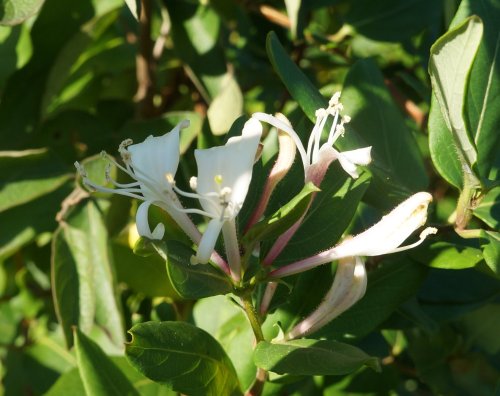 |
| Japanese Honeysuckle, Lonicera japonica, flowers can have pink bases |
 |
| Japanese Honeysuckle, Lonicera japonica, berries and leaves |
 |
| Japanse Honeysuckle, Lonicera japonica, berries and leaves in winter |
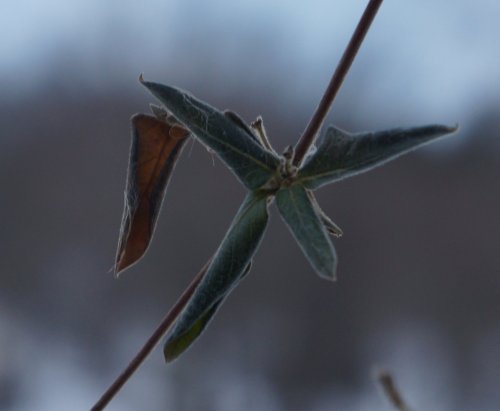 |
| Japanese Honeysuckle, Lonicera japonica, rolled up leaves in the winter cold |
 |
| sometimes the bases look heart shaped, but they are not |
 |
| If you see a vine with lobed leaves like tiny oak leaves in NJ it is always Japanese honeysuckle |
 |
| flowers turn yellow as they age |
 |
| more typical flower color. Note cylindrical unopened flowers. |
 |
| immature fruit |
 |
| green fruit |
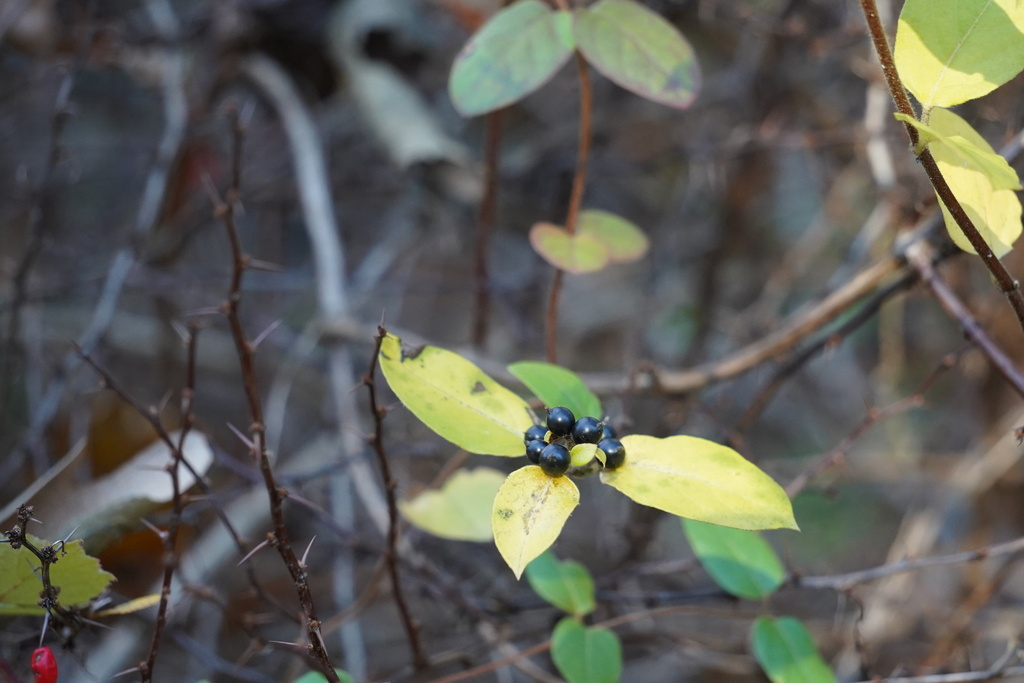 |
| fall color and foliar fruit flagging |
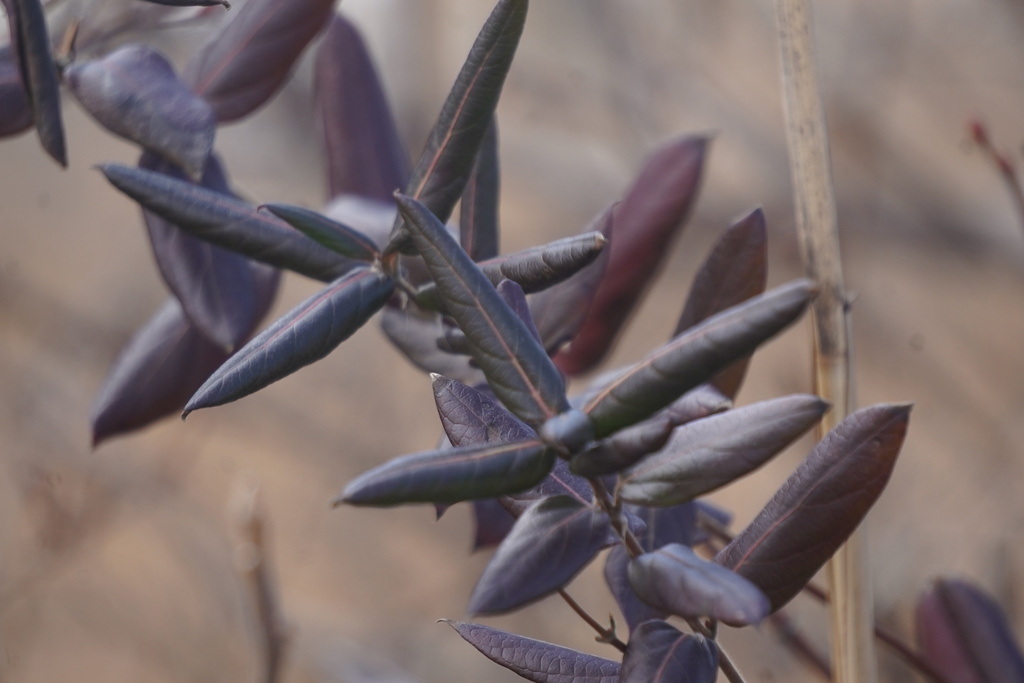 |
| In winter, if exposed to lots of sun, the leaves turn reddish |
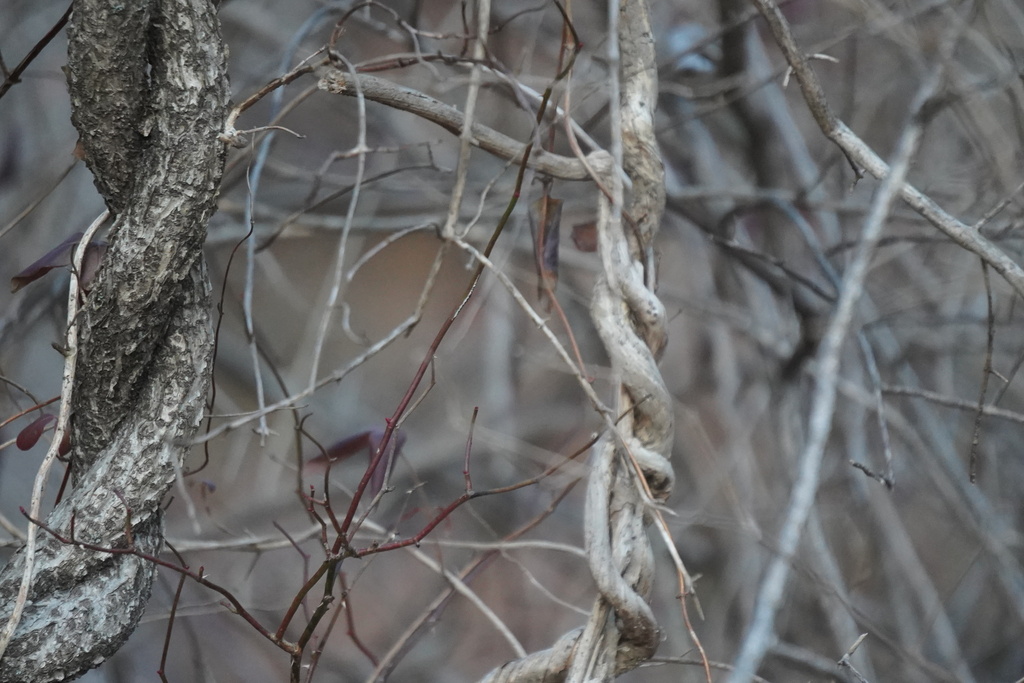 |
| Here honeysuckle is in center with bittersweet at left. honeysuckle is lighter, more papery-shreddy and twines up and to the left. Bittersweet twines up and right and has diamond shaped dark marks on the bark and does not shred. |
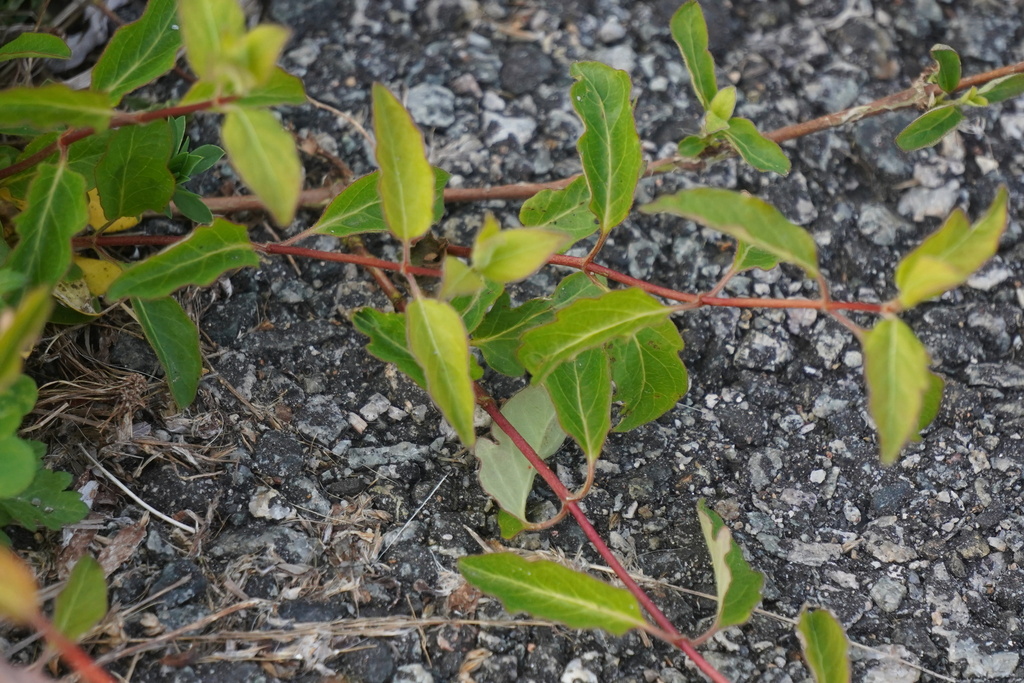 |
| honeysuckle vines are often (but not always) reddish when young |
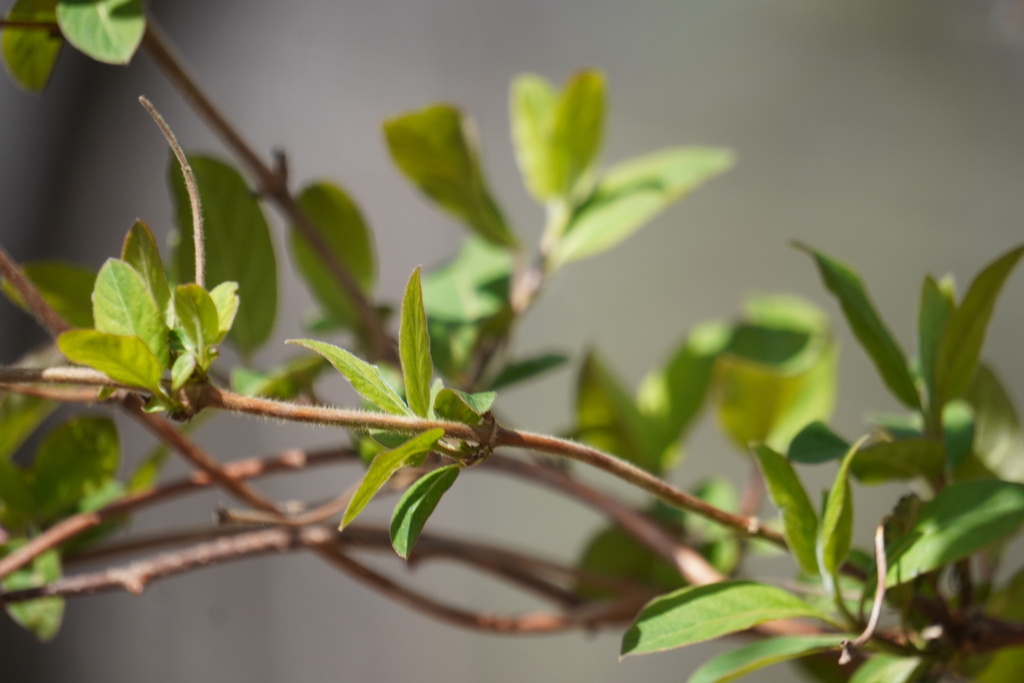 |
| new shoots or vigorous growth of honeysuckle often have clustered-looking leaves, making it hard to see that they are opposite. |
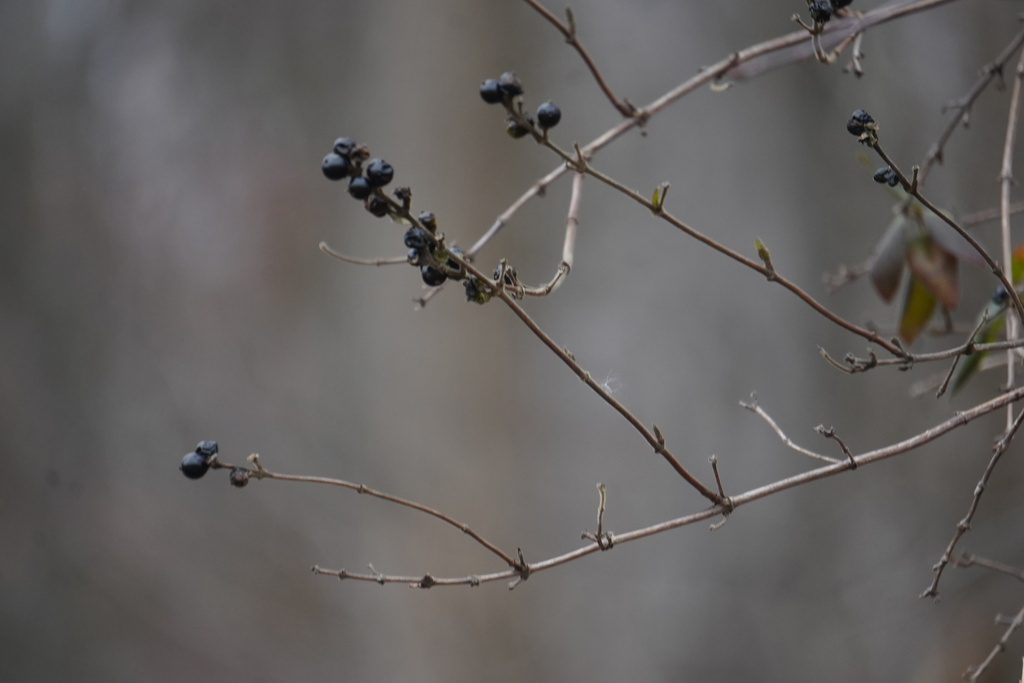 |
| Sometimes in fall you will see the fruit with no leaves nearby |
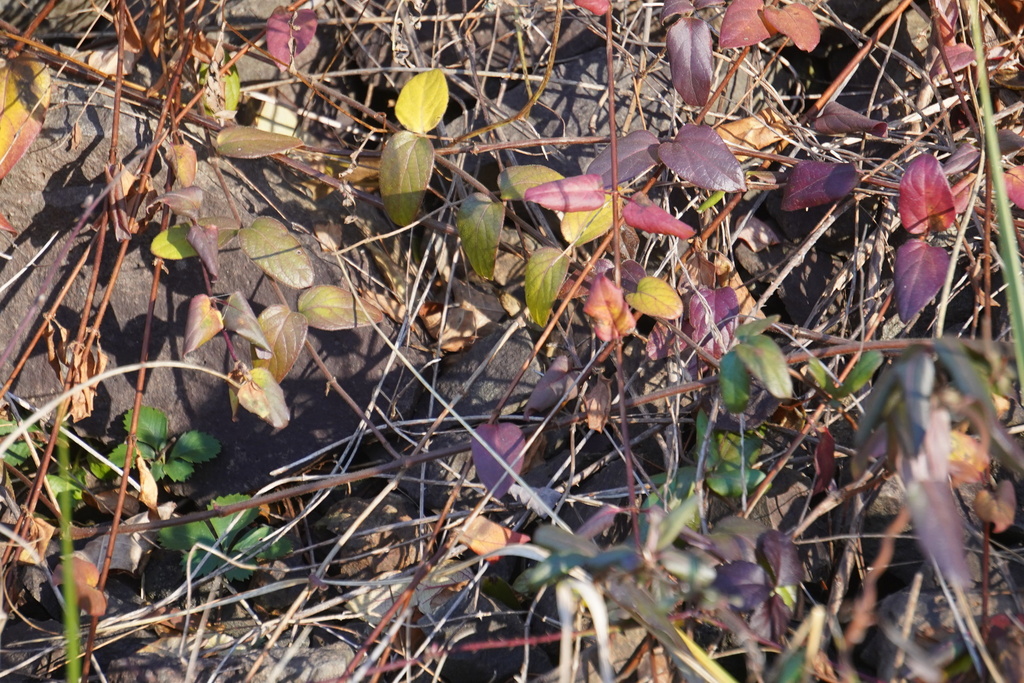 |
| fall color can vary -- yellow, olive, maroon, bronze, red. |
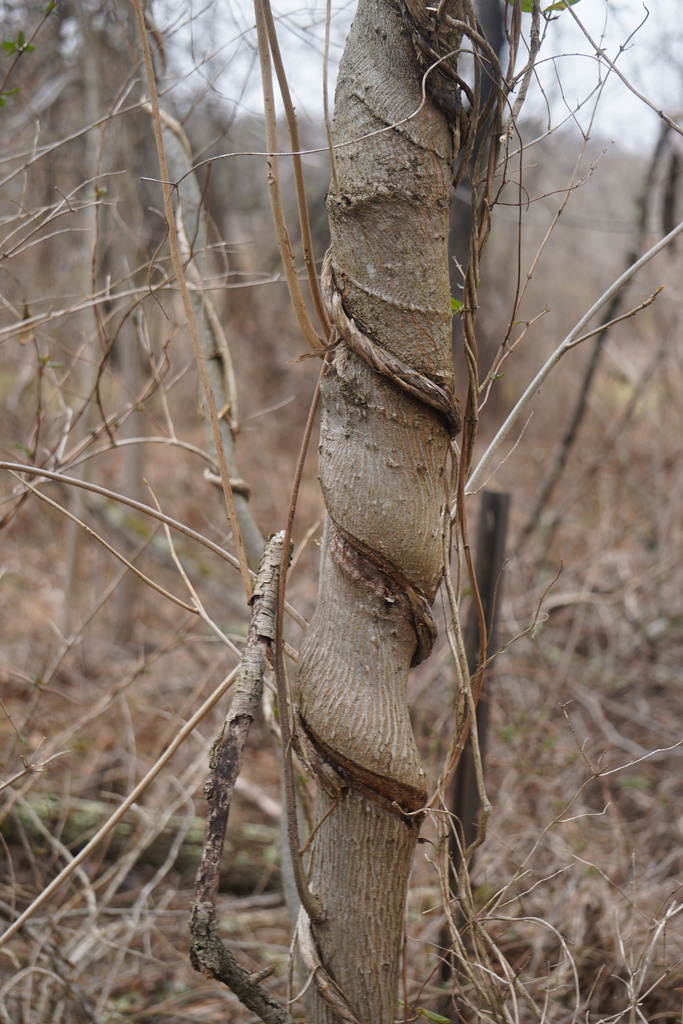 |
| honeysuckle girdling a young tree |

No comments:
Post a Comment